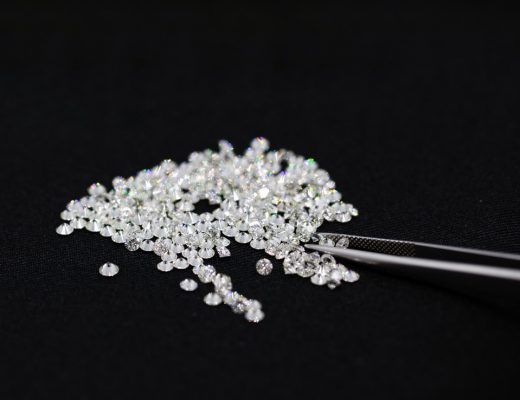
The illicit trade of blood diamonds has always been a huge concern in the diamond industry, but it was not until the release of Leonardo DiCaprio’s 2006 movie ‘Blood Diamond’ that the heated topic took center stage in the minds of retailers and consumers. To most diamond buyers, a first priority in the search for the perfect loose diamond is that it not be in any way connected with conflict diamonds. Responsible diamond importers and wholesalers can reassure customers with the knowledge that their diamond was mined and processed in an ethical manner by adhering to the guidelines set forth in the Kimberly Process.
The Kimberley Process (KP) is an initiative that was launched in conjunction with the United Nations and the gemstone industry in an effort to rid the market of conflict diamonds. Conflict diamonds first gained national exposure in the late 1990s, when the country of Sierra Leone was wracked with civil war. The brutal nine-year battle was sparked by, in part, the desire of insurgents to control the local diamond mines. In the years since, the term “conflict diamonds” has been used to describe any diamonds that are illegally sold to fund hostile warfare, primarily in western and central Africa.
The UN has issued the following official definition of conflict diamonds: “…diamonds that originate from areas controlled by forces or factions opposed to legitimate and internationally recognized governments, and are used to fund military action opposition to those governments, or in contravention of the decisions of the Security Council.”
The ultimate objective of the Kimberly Process is for all diamond trading to follow a stabilized, legitimate procedure while complying with all environmental and social regulations. All members of the Kimberly Process pledge to ship only conflict-free diamonds to jewelers and consumers.
The Kimberley Process gets its name from the town of Kimberley, South Africa, where the original proponents met in May of 2000 to identify strategies for reducing the flow of conflict diamonds. The following December, the Kimberley Process Certification Scheme (KPCS) was adopted by the U.N. as a means of standardizing the requirements for certified distributors of conflict-free diamonds. Members of the KPCS must agree to enact laws that regulate the import and export of diamonds, to purchase gemstones only from suppliers who are also in accordance with the KPCS, and to provide full disclosure of all diamond trading.
Today, approximately 99.8% of the world’s diamond distributors adhere to all guidelines of the Kimberly Process as a means of boycotting conflict diamonds. Since its inception, the initiative has resulted in a significant decrease in the flow of conflict diamonds. In addition to working to eliminate conflict diamonds, the Kimberly Process has also worked to boost the economic development of impoverished countries by increasing the flow of legitimately acquired diamonds into the jewelry market.
It is widely believed that responsible consumers, those that inquire about the origins of their diamonds before purchasing, are the biggest component in the effort to stop the trade of conflict diamonds. Here at Brilliance, we are proud to be a certified diamond retailer that is in full compliance with the Kimberley Process.
Victoria’s Secret’s Miami fashion show had all the usual stars and glamour, but all eyes were on one very unique lingerie piece. Model Adrianna Lima was adorned with a 5 million dollar bra named the Black Diamond Fantasy Miracle Bra. Totaling 1500 carats of diamonds and rubies, the stunning display of diamonds surpassed the glamour of the 68 sexy outfits displayed at the show.
A true masterpiece, the bra is set with 3,575 black diamonds, 117 round cut 1-carat loose diamonds, 34 rubies, and two stunning black diamond drops. This behind-the-scenes video provides insight into the conception and creation of this designer bra.
As smart consumers, men and women looking for a less expensive way to buy very expensive loose diamonds would look to pawn shops, jewelry exchanges, and local jewelry retailers. Although offered what seemed to be beautiful diamonds at great prices, many times the consumer would have to trust that the storeowner was supplying them with the color, clarity, and general quality of a diamond that he claimed. Now, certified diamonds are available online at great prices and those consumers are able to make more confident purchasing decisions knowing that the diamond’s quality is certified.
Why choose a certified diamond?
With diamonds that are not certified, consumers must trust the opinion of the seller as to the quality of a diamond. A certified diamond has been inspected and graded by a trained expert gemologist. Diamond grading is conducted using internationally accepted standards; color is generally graded from D-Z, clarity from Flawless – Included, and Polish and Symmetry from Ideal/Excellent – Poor. The evaluation is printed on a diamond certificate, which accompanies the diamond when it is sold.
To ensure an unbiased inspection, make sure that the laboratory that has graded your diamond is a third-party grader that is not affiliated with the seller from whom you are purchasing. (Otherwise, it’s like asking a Toyota dealer to inspect and give a quality rating to their own cars!)
Brilliance is proud to offer over 60,000 certified diamonds of all shapes and sizes for you to choose from. Although we have several trained gemologists on staff, each of our diamonds are certified by one of the world’s leading authorities on diamond certification, including the Gemological Institute of America (GIA), the American Gem Society (AGS), the European Gemology Laboratory (EGL), the International Gemological Institute (IGI), and the Hoge Raad Voor Diamant (HRD). This way, our customers can rest assured knowing that their diamond is graded by a non-biased third-party laboratory and that their diamond certificate is recognized and valued internationally.
For assistance finding the perfect certified diamond, contact a Brilliance diamond and jewelry expert at 866-737-0754.
Setting a certified diamond into an engagement ring is an intricate process that involves exact measurements and skilled craftsmanship. Extreme care must be taken to ensure that the engagement ring and the diamond remain intact and properly set. Unsurpassed quality is a priority at Brilliance; that’s why we have only master jewelers working to create our exquisite fine jewelry.
Thomas Morello is a master jeweler at the Brilliance.com headquarters. With over twenty years of experience in the field of fine jewelry, he has developed an eight-step procedure for setting a loose diamond in a solitaire engagement ring. Along with reading their descriptions, you can view Thomas executing the eight steps in the images below.
Step 1
The jeweler opens the platinum prongs to the size of the diamond. The further the prongs are opened, the lower the diamond will sit in the setting.
Step 2
After the prongs have been positioned to the size of the diamond, the jeweler cuts the prongs to the height of the diamond. To do this, he removes the top of the platinum prongs with fine jewelry clippers, leaving extra metal to secure the diamond.
Step 3
After the prongs are cut, a residue is left on them. The jeweler removes this residue using a flat engraving tool.
Step 4
The jeweler must position the loose diamond so that the star facets sit within the prongs and the proper facets remain between the prongs.
Step 5
Using a pusher tool, the jeweler bends the prongs over the diamond at a 45 degree angle, locking the diamond down in its setting.
Step 6
The jeweler smoothens the tips of the prongs using a specialized filer tool.
Step 7
To give the prongs a smooth and fine finish, the jeweler glides a spinning rubber wheel along the prongs.
Step 8
In the final step, the jeweler polishes the engagement ring setting to its exquisite mirror-like finish. He plates white metal pieces in rhodium to give a white, strong exterior coating.
For those celebrating birthdays in November, the only month with more than one birthstone, the versatile beauty of topaz and the earth-toned hues of citrine hold a special significance. Both gems are designated as official birthstones of November. There’s no denying their exquisite appearance, but there’s more to these striking gems than meets the eye. Deeply rooted in history and legend, these stones continue to serve as meaningful symbols today, and are widely popular jewelry enhancements.
Citrine
Deriving its name from the French word for lemon, citrine is the most valuable type of quartz gemstone, ranging in color from pure yellow (the most desirable and valuable) to a brownish shade. When found in nature, citrine is usually an amber color. A majority of naturally occurring citrine is found in Brazil, Russia, Madagascar, and the United States, although most commercially sold citrine is manufactured from hybrids of other stones.
In ancient times, citrine was believed to shield the wearer from evil, often worn as a talisman during times of war. Legend also held that the stone made the wearer immune to a snake’s venom. Today, many regard citrine as a source of serenity and mental clarity.
Topaz
Found in a wide array of colors, topaz is one of the most versatile gemstones, making it ideal for use in fine jewelry. In its purest form, topaz is clear, but it most often contains variations of yellow, green, blue, pink, and grey. The rarest shades are red and pink, which command the highest market value. Most commercially sold topaz has been treated with heat to bring out the natural hues of the stone.
In the Middle Ages, all yellow gemstones were referred to as topaz, but today the name is exclusive to the silicate mineral formed from aluminum and fluorine. Natural topaz is mined primarily in Brazil, Mexico, Germany, Sri Lanka, and the United States. The stone can be found in large, crystallized deposits weighing up to several hundred pounds.
Many believe that the topaz gemstone helps to reduce levels of stress and anxiety, promote relaxation and tranquility, and improve overall health and well-being. In addition to serving as one of November’s birthstones, topaz is also the commemorative stone for the 4th wedding anniversary.
Exceptional Fall Gifts
Need a unique gift idea for a November birthday? At Brilliance, we’re proud to offer an exquisite collection of citrine and topaz jewelry.
It’s mid-fall and that means that the holidays are quickly approaching. The shopaholic in me is awaiting Black Friday, the day after Thanksgiving that is known to be the biggest shopping day of the year. Like many other shoppers trying to find the perfect gifts for their loved ones, this year I am doing my shopping online from the comfort of my home instead of spending the day fighting the crowds. As a leading online retailer of diamonds and fine jewelry, we at Brilliance are offering special holiday savings to make this shopping season even easier. Brilliance coupon codes give you a way to save up to $150 and can be used with any Brilliance purchase. Simply apply the appropriate discount code during the checkout process.
$50 off any order $5,000 or over! Use coupon code BC50BR.
$75 off any order $7,500 or over! Use coupon code BC75BR.
$100 off any order $10,000 or over! Use coupon code BC100BR.
$150 off any order $15,000 or over! Use coupon code BC150BR.
These codes expire November 30, 2008. So be sure to check back in the beginning of December for the new discount codes.
Be sure to place your order with a Brilliance Sales Representative for the chance to save even more!
If you pay via wire transfer, you are eligible for a 2% discount on your entire purchase. Furthermore, Brilliance offers free overnight shipping for all orders. Contact a Brilliance diamond and fine jewelry expert at 866-737-0754 or email us at service@brilliance.com for assistance in finding the perfect diamond and fine jewelry products.
Love it or hate it, laser inscription is growing in popularity among today’s diamond consumers. Applied using a very fine, pin-sharp laser beam, inscriptions can be applied by qualified diamond processing labs to indicate the unique certification number of the stone, or consumers can request the addition of their own personal message.
During the inscription process, the heat of a precise laser is applied to the surface of the diamond’s carbon crystal, converting a very thin layer into opaque carbon graphite. The end result is a three-dimensional marking that can be seen under a 10x magnifying lens. Laser inscriptions can barely be seen with the naked eye, and they do not compromise the diamond’s inherent cut, color, or carat weight.
Individualizing your diamond with a laser inscription offers several advantages:
Verification of identity: In cases where you have to leave your diamond with a jeweler to be cleaned or repaired, you can use an inscription to verify that you’re receiving the correct stone when it’s ready for pickup. This eliminates the chances of your stone being confused with someone else’s, whether purposefully or accidentally.
Sentimental keepsake: For engagements, anniversaries, or other special occasions, many choose to apply a laser inscription to a diamond gift. The microscopic message provides a unique, private way to commemorate dates, names, or special sentiments.
Lower insurance premiums: Some insurance companies recognize the added protection and security of laser inscriptions by lowering the coverage costs for engraved diamond jewelry.
The cost of laser inscription can vary based on the size of the diamond and the technology used to create the engraving. In many cases, pre-mounted diamonds can be inscribed without removing the stone from its setting.
In spite of the advantages, some diamond purists prefer not to alter the surface of a gem-quality diamond with an inscription, believing it detracts from the natural beauty of the stone. At Brilliance, we cater to both preferences, offering a premium assortment of high-quality diamonds with and without laser inscriptions.
If you decide to personalize your diamond with a laser inscription—before or after your purchase—we’ll step you through the engraving process. We use only the country’s premier gemology labs, including the Gemological Institute of America (GIA), the American Gem Society (AGS), and the European Gemology Lab (EGL), to engrave our Brilliance certified diamonds.
New York—A sun-soaked penthouse studio in Greenwich Village was ablaze with every conceivable hue on Monday when the American Gem Trade Association (AGTA) gave editors a preview of the winners and the runners-up for its 2009 AGTA Spectrum Awards, which spotlight the beauty and diversity of colored gemstones.
An opal’s beauty has the power to steal the breath from anyone who beholds it, but for those born in the month of October, the shimmering gemstone holds a special significance. The official birthstone of the first full month of fall, the precious opal has often been compared to an iridescent rainbow filling the sky after a sudden summer shower. Indeed, the rich medley of colors found in the heart of this unique gem make it one of the most versatile and visually striking natural stones.
Originally named after the Latin word “opalus,” which translates to “precious jewel”, the opal was also dubbed “Cupid Paederos” (“child beautiful as love”) by the Romans, who were fascinated by the stone’s remarkable ability to reflect different colorations of light. Due to its rich combination of hues, many believed the stone to possess the combined powers of all other birthstones. One early legend claimed the opal fell to the earth from heaven, obtaining its colors from rainbows and flashes of lightning on the way down. Treasured by ancient monarchs as a protective stone that warded off evil threats, opals were historically worn in crowns, shields, and necklaces as a protective talisman.
Opal has been discovered in many types of bedrock, including sandstone, limonite, rhyolite, and basalt. Formed from a mineral called silica, the stone is found in hot springs beneath the earth’s surface. As the springs dried up, a mixture of silica and water seeped between the cracks of the rocks, creating opal. Inherent to lower climates, a majority of the world’s opal supply is mined in Australia, although it has also been found in the United States, Mexico, Brazil, Ethiopia, and Czechoslovakia.
Due to its high water content, opal is a soft, vulnerable stone that must be protected from extremes of temperature, chemicals, and daily wear and tear, all of which can cause damage, drying, and loss of color. Jewelry artisans must take great care when processing, cutting, and setting opal stones.
Known as a symbol of loyalty and conviction, the opal serves as a meaningful and visually striking gift for anyone with an October birthday, thought to bring good luck to anyone born in that month. The opal is also the official stone for the 14th wedding anniversary. The fire and energy of an opal is uncontested in the precious gemstone industry.
At Brilliance, we’re proud to offer a beautiful assortment of exquisite opal jewelry. Choose from a range of shapes and sizes, equally striking when set individually or in conjunction with our other fine gemstones and diamonds.
As an avid jewelry lover, I know that the diamond jewelry selection that is available can sometimes be overwhelming. Whether you are shopping for the perfect gift or for the right accessory for a special occasion, you’ll want to know what jewelry item will suit your needs. That’s why I’ll be writing in with “spotlight” articles on various jewelry item types that will give a detailed explanation of what to look for to ensure you receive the highest quality at the right price.
Diamond Stud Earrings
Quite possibly the most versatile jewelry piece on the market, diamond studs provide a classic, timeless way to wear the world’s most popular gemstone. Combining a brilliant sparkle with an understated setting, they exude elegance and femininity while remaining tactfully discreet. Emanating a timeless style that has endured for decades, the diamond stud will likely never fall out of style.
Studs can be paired beautifully with most any ensemble. For everyday wear, they can add a bit of glitz to jeans and a sweater, and they also make an appropriate accessory for a formal gown. From morning coffee at the office to a dinner party after work, diamond studs transition smoothly from day to evening. Some of today’s biggest entertainment personalities—Eva Longoria, Christina Ricci, Charlize Theron, Sharon Stone, and Keira Knightley, just to name a few—have sported this timeless jewelry style for both formal red carpet appearances and everyday errands.
When choosing the right pair of diamond studs for you, begin by evaluating the shape of your face. Thin faces are best paired with round-cut diamond studs, while a princess (square) cut is well-suited to a broader face. Next, ensure the chosen metal setting complements your skin tone; yellow gold harmonizes better with warm skin tones, while cool skin tones mesh well with white gold or platinum. Setting is also important when selecting diamond studs. Look for “martini” or “basket” settings of at least three or four prongs or the modern bezel setting to ensure that the studs are held flush against your ear and not jutting too far out.
Like any diamond jewelry piece, studs are evaluated and appraised based on the “four Cs”: cut, color, clarity, and carat weight. A diamond stud with favorable ratings in all areas will command the highest market price. Those with a more conservative budget may choose to purchase diamond studs of a slightly lesser quality. Unlike an engagement ring, which is always worn prominently on the hand, studs are worn less conspicuously on the ear, making it less likely that any inclusions or imperfections will be spotted. When shopping for quality diamond stud earrings, look for at least H-I color and SI2 clarity.
At Brilliance, we offer a large assortment of luminous diamond studs. Whether you opt for pre-set studs or choose to design your own, each stud uses gem-quality, certified diamonds to achieve an unforgettable sparkle, cut, and clarity.
Click here to shop the Brilliance selection of quality diamond stud earrings.
No comments | Leave a comment